How Rain Shapes Shared Customs in a Public Square
See how rain shapes shared customs in a public square, from umbrella etiquette to sheltered pauses, and learn how small design choices support considerate use.
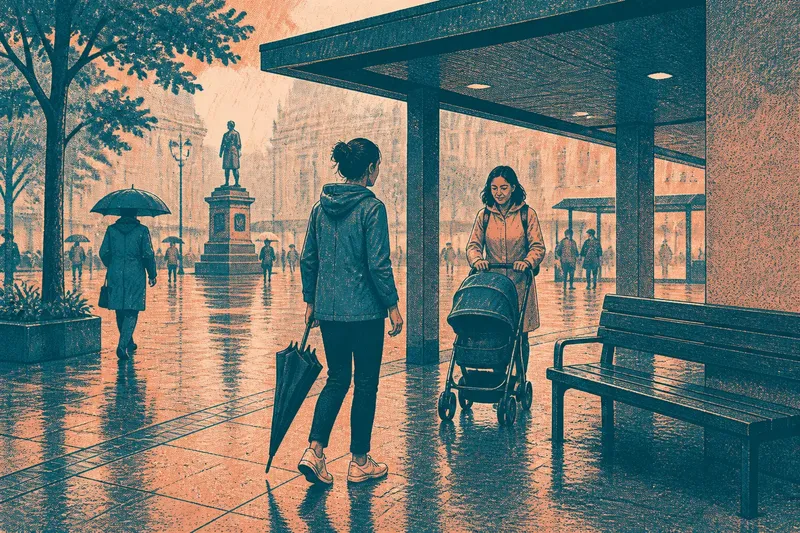
Two people reach the same narrow canopy in a public square just as rain starts again. One closes an umbrella; the other steps aside to let a stroller pass. These small courtesies are shared customs, and rain makes the ways a square supports them easy to notice.
Customs under cover
Rain draws people toward awnings, arcades, tree cover, and transit shelters. Where people gather, everyday rules take shape: leave room to pass, make space for someone waiting, and avoid spreading bags across a shared bench.
The design can make those courtesies easier or harder. A broad overhang may shelter both a seat and the approach to it. A narrow strip of dry paving beside a doorway can become a bottleneck, especially when people arrive with umbrellas.
Watch for the arrangement rather than judging individuals. Does the covered area have room for someone to pause without blocking the path? Can people waiting and people passing use it at the same time? Those details show how the square accommodates shared habits.
Umbrellas and passing
Open umbrellas change the space people need. Their edges can meet over a narrow path, and dripping tips can make a crowded shelter uncomfortable. People often angle umbrellas away from others or close them under cover, but the layout affects whether either choice is practical.
Notice whether a path widens near a shelter entrance or bench. A little extra room can let someone fold an umbrella without stopping in the main flow. A bin or umbrella stand may help in some settings, but it should not obstruct access or become a reason to leave belongings unattended.
Consider signs and local conventions, too. A transit shelter may have marked waiting areas; a plaza may leave people to negotiate space informally. Neither arrangement tells the whole story. Look at how the posted guidance and the physical space work together.
Seats as shared space
A wet bench changes how people share a pause. Someone may choose a dry end, wipe a seat, stand nearby, or offer room to another visitor. The material and placement matter: a bench under an overhang may stay dry, while its route from the path remains exposed.
Check the surrounding space, not just the seat. A person using a mobility device needs a clear place beside the bench; a caregiver may need room to help a child. If the only dry standing area blocks the route, the square is asking visitors to solve a design problem through negotiation.
For example, imagine a square with one bench beneath a short awning and a clear paved approach. As rain resumes, a person with a folded stroller reaches the bench while another visitor is standing under the same awning. The standing visitor shifts to the side, leaving the approach open; the observable result is that both can wait without blocking passersby. If the awning were too narrow for that adjustment, people would have to choose between staying dry and keeping the route clear.
Shared customs in rain?
How can I observe without intruding?
Focus on the layout and general movement, not faces or private conversations. Brief notes about a crowded shelter or a clear passing lane are useful without identifying anyone.
What makes a shelter easy to share?
Look for enough covered space to enter, wait, and pass without forcing people into the rain or against a wall. If the shelter is cramped, note where the crowd spills into the walking route.
Should I report a maintenance concern?
If water or a physical obstruction appears to affect access, describe the location and visible effect in neutral terms. Use the site’s published contact channel for routine concerns, and contact the appropriate local service about an urgent hazard.
Do signs define how people behave?
Signs can set expectations, but their placement and clarity matter. Compare the instruction with the space it governs: if a waiting-area sign points to a narrow, exposed strip, visitors may still gather under nearby cover.
Design and courtesy
Shared customs do not arise from manners alone. A clear route, a seat with room beside it, and cover that reaches the approach all reduce the need for strangers to negotiate every pause. When those features are missing, people may still help one another, but the layout makes cooperation more demanding.
For a useful note, connect one visible feature to one shared use: “The canopy shelters the bench but not its approach, so visitors cross the wet path to sit.” That description avoids guessing at motives and gives a site manager a concrete place to look.
The next time rain sends people toward the same dry patch, notice what lets them share it: a wider path, a bench set back from the flow, or a sign that makes the waiting area clear. In a public square, a small design detail can turn a cramped pause into a considerate custom.